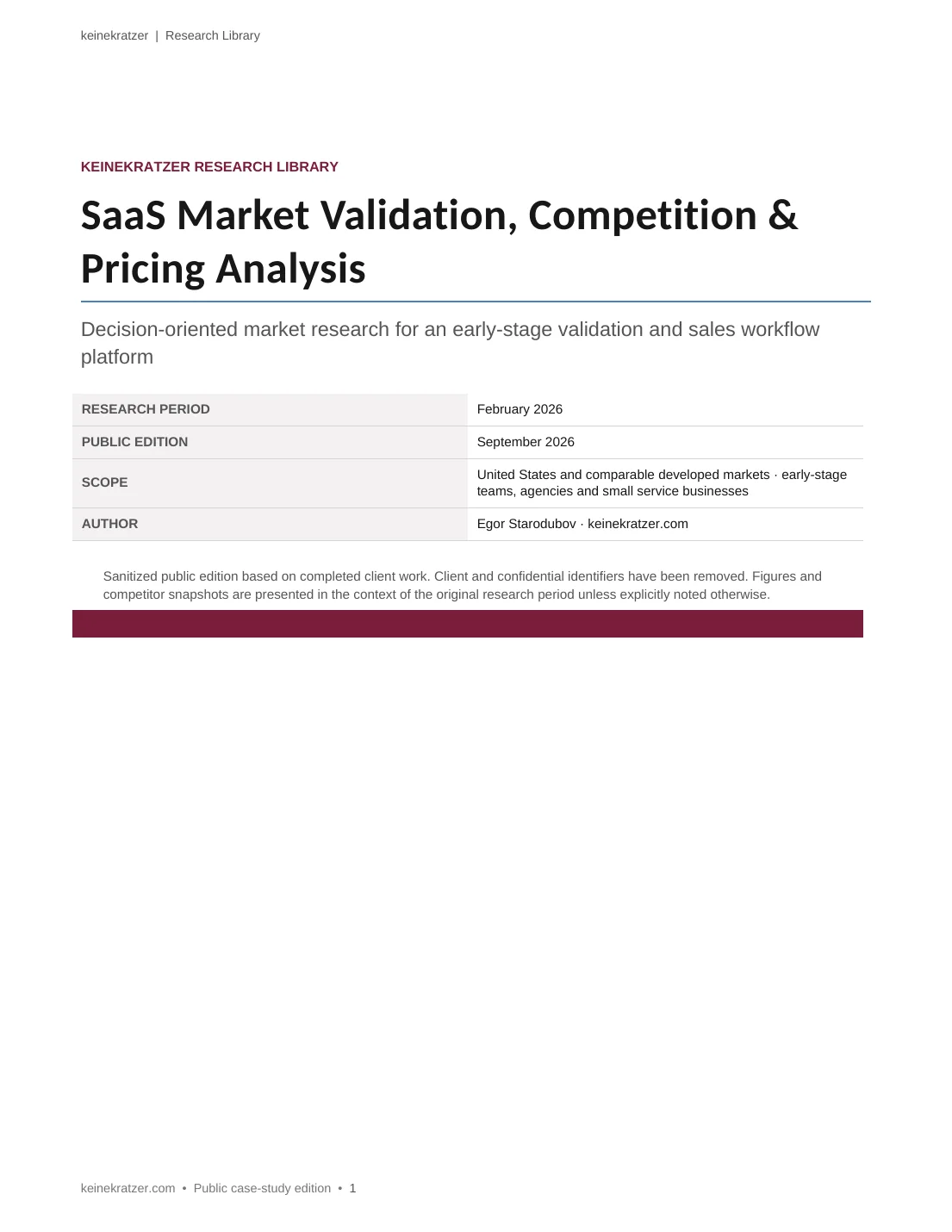
SaaS Market Validation, Competition & Pricing Case Study
Research into a software product for running team work: possible buyers, competing tools and pricing.
The public edition preserves the research structure, evidence and decision logic while removing confidential client identifiers.
Is there a market, who buys, and what should we charge?
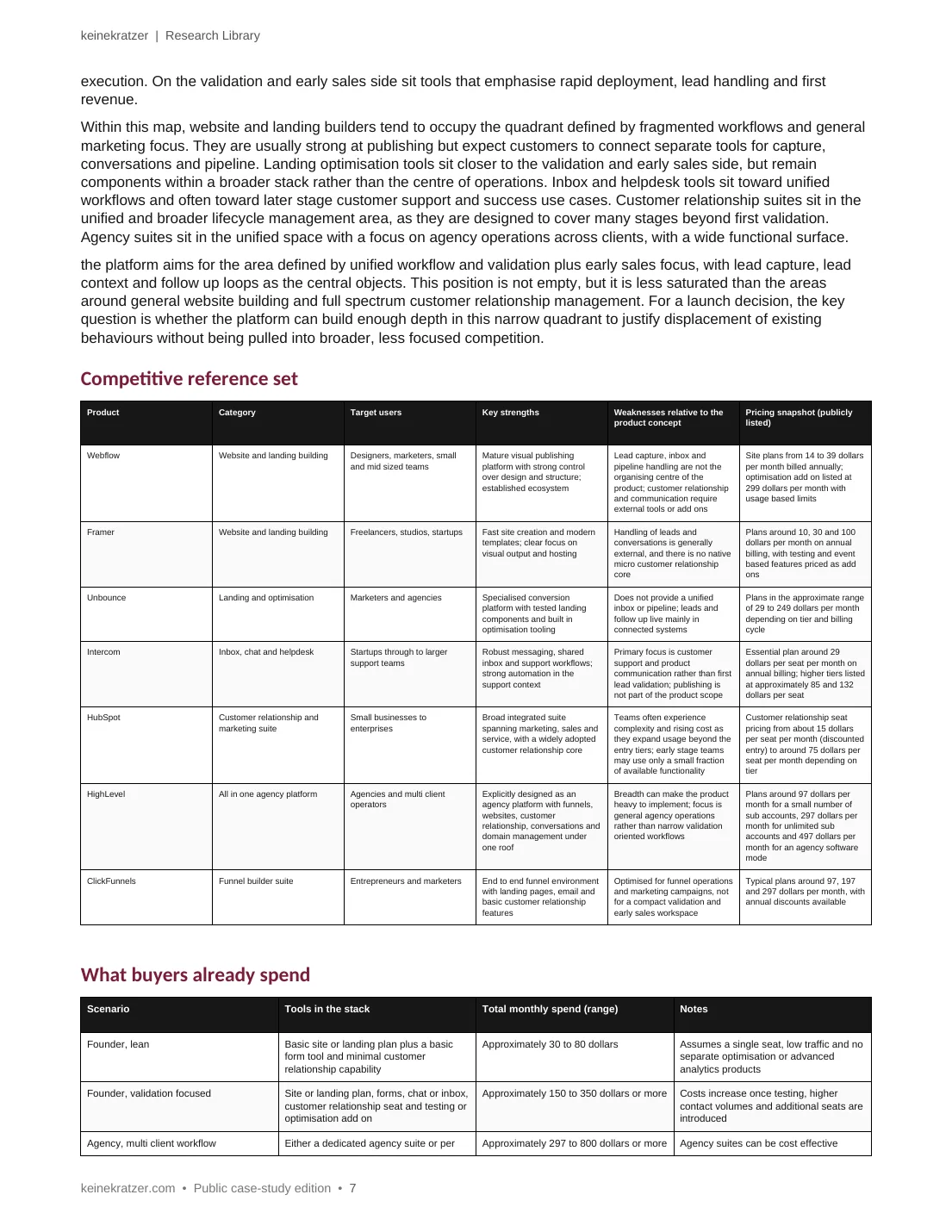
The report compares potential buyers, competing tools and prices before recommending what to test next.
A launch decision built from several kinds of evidence
How to interpret this public research case
Is this a SaaS market research template?
No. It is a sanitized example of completed client work. The reasoning structure is reusable, but the evidence belongs to the stated research period and scope.
Does the report claim product-market fit?
No. The conclusion is conditional. Customer discovery and live tests still come next.
Can this analysis be rebuilt for another SaaS market?
Yes. The report makes the assumptions visible and states what evidence would change the recommendation.
From market evidence to working models
Read it like a decision memo
Need the same decision answered for your market?
Send the market, product and decision you are stuck on. I can build the research around the decision you need to make.