AI Interior Design Market & Financial Analysis Case Study
Market structure, monetization and unit economics combined so the product thesis can be tested as a business, not just as an AI feature.
The report includes modeled assumptions for TAM/SAM/SOM, CAC/LTV and break-even. Those are scenario inputs, not timeless market facts, and should be updated before a live investment decision.
Can the product thesis become a viable business model?
The useful part is the bridge between market evidence and modeled economics: monetization routes, conversion assumptions, CAC/LTV, contribution logic and break-even. Historical market inputs are assumptions to refresh, not sacred scripture.
Market evidence and financial assumptions are kept separate on purpose
Use it as a model for research + economics
How to interpret this market and financial case
Is this a current 2026 market forecast?
No. It is a public case-study edition of work completed in June 2025, and the page keeps that research period explicit.
Are TAM, CAC, LTV and break-even figures observed facts?
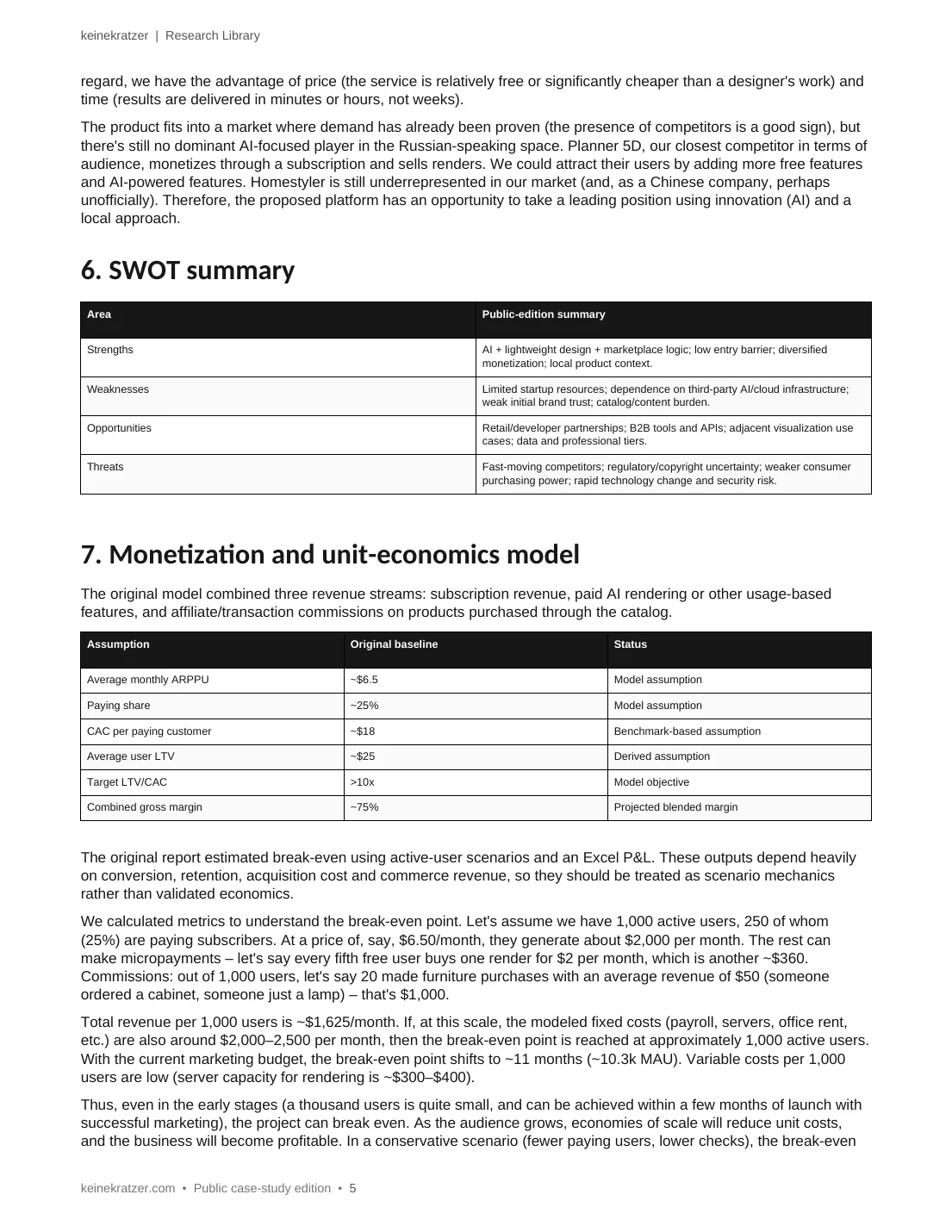
No. The strongest numerical outputs are modeled assumptions or research-period estimates retained to show how the decision model was structured.
Why publish an older AI-market study?
Because the durable value is the method: segment users, map substitutes, connect monetization to behavior and expose which financial inputs are assumptions.
From market evidence to financial decisions
Need market evidence and economics in the same model?
Send the product, market and decision. I can combine research with the financial assumptions needed to test whether the business case holds together.